
Digital Marketing Website
Build a Strong Online Presence With Practical Digital Marketing Strategies That Attract the Right Audience and Support Real Business Growth
Introduction
A strong digital marketing website is more than a collection of attractive pages. It should clearly explain what a business does, who it helps, and why people should trust it. When visitors arrive on your website, they should quickly understand your services and know what step to take next.
Over the past 3+ years, I have worked with 70+ brands and clients across social media marketing, content creation, video production, and digital marketing. One thing I have learned is that every business needs a different online strategy. A local business, personal brand, startup, and established company cannot all communicate with customers in exactly the same way.
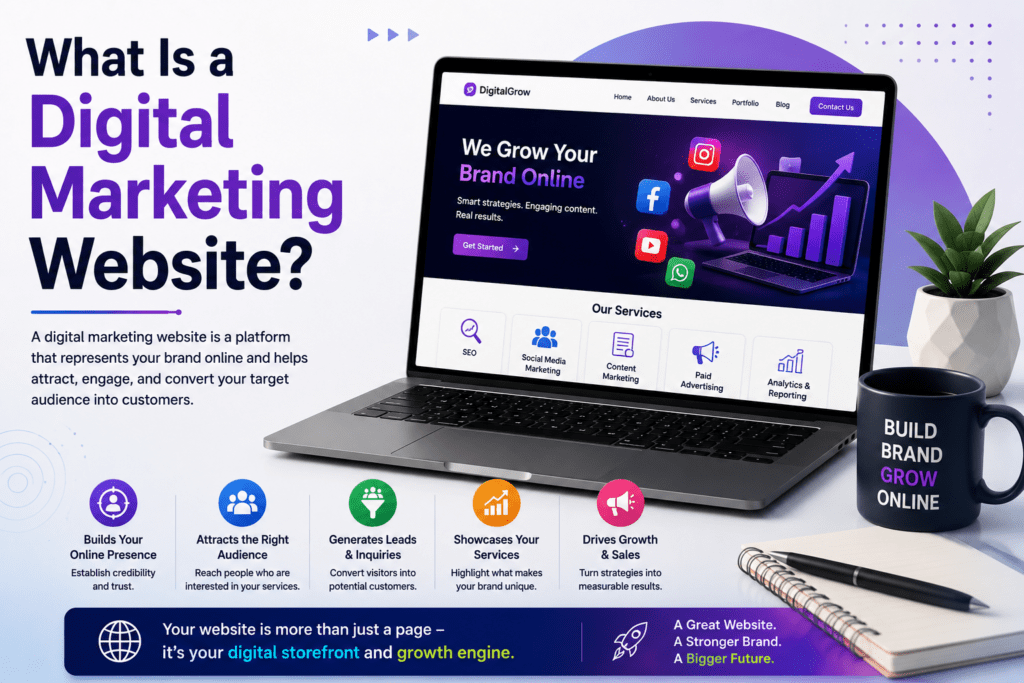
What Is a Digital Marketing Website?
A digital marketing website is an online platform designed to present a business, its services, expertise, and value to potential customers.
Unlike a basic information website, it can support different marketing activities such as:
- Search engine optimization
- Social media marketing
- Content marketing
- Paid advertising
- Lead generation
- Brand positioning
- Audience research
- Performance tracking
The main purpose is simple: help the right people discover your business, understand your value, and take a useful next step.
For example, imagine a photography studio that receives visitors from Instagram. If its website only displays photos without explaining services, pricing information, location, or a clear enquiry option, interested visitors may leave without contacting the studio.
A well planned website can turn that attention into meaningful enquiries.
Why Does a Business Need a Digital Marketing Website?
Your website often becomes one of the first places where potential customers research your business.
A visitor may discover you through Google, Instagram, YouTube, an advertisement, or a recommendation. Your website gives them an opportunity to understand your work in one place.
1. It Builds Trust
Professional design matters, but trust comes from more than appearance.
Your website can include:
- Genuine client work
- Case studies
- Service information
- About section
- Testimonials
- Contact details
- Relevant experience
These details help visitors make a more informed decision.
2. It Supports Lead Generation
A website should make it easy for an interested visitor to contact you.
Simple options include:
- Contact forms
- WhatsApp enquiries
- Consultation requests
- Service enquiry buttons
- Email contact
The important point is to avoid making people search for how to contact you.
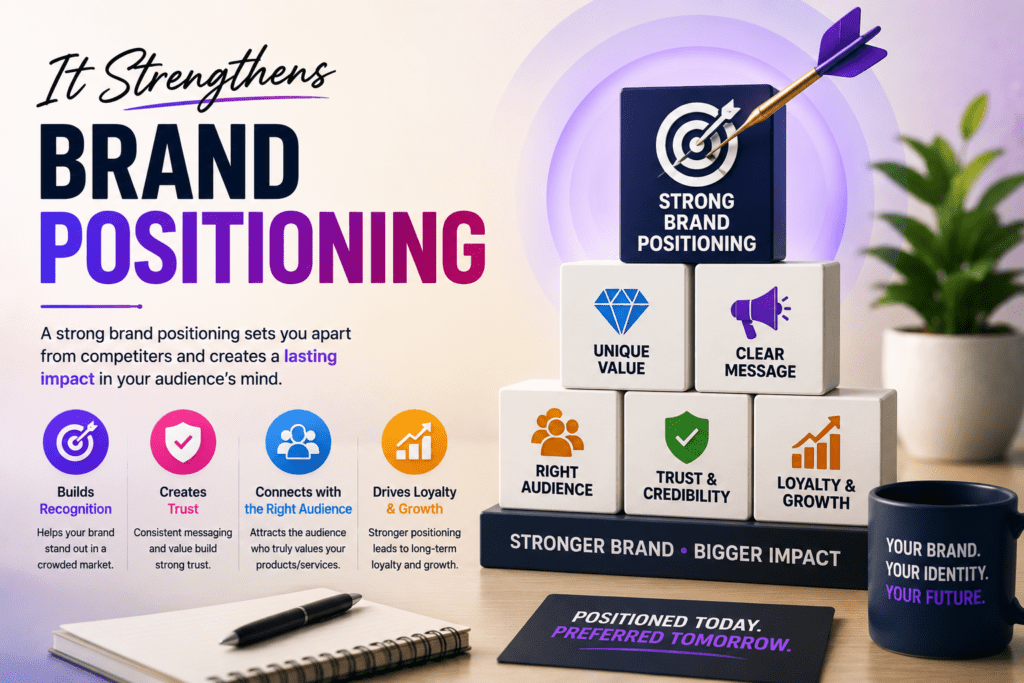
3. It Strengthens Brand Positioning
Your website gives you control over how your brand is presented.
Your colours, photography, writing style, services, portfolio, and brand story should work together. When these elements feel consistent, visitors can understand the personality and positioning of the business more easily.
Important Elements of a Good Website
A useful website does not need unnecessary features. It needs the right features.
| Website Element | Purpose |
|---|---|
| Clear headline | Explains the main value quickly |
| Service pages | Helps visitors understand what you offer |
| Portfolio | Demonstrates practical experience |
| About section | Builds personal connection and credibility |
| Contact form | Makes enquiries easier |
| Mobile design | Supports visitors using phones |
| SEO content | Helps relevant searches discover the website |
| Call to action | Guides visitors toward the next step |
Clear Website Copy
Your homepage should answer three basic questions:
What do you offer?
Who do you help?
Why should someone consider working with you?
If visitors cannot understand these points quickly, even a beautiful website can struggle to convert attention into enquiries.
Mobile Friendly Experience
Many people browse websites using smartphones. Therefore, buttons, images, forms, text, and navigation should work comfortably on smaller screens.
A simple mobile experience can make a meaningful difference because users should not have to zoom, scroll excessively, or struggle to find important information.
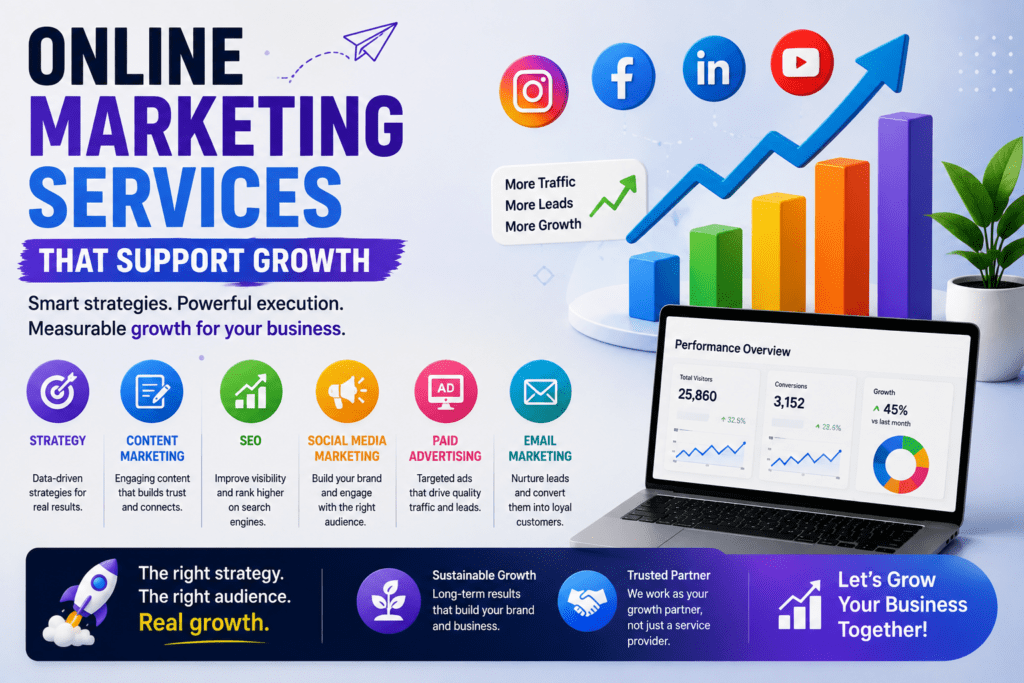
Online Marketing Services That Support Growth
A website works best when it connects with other marketing activities.
Social Media Marketing
Social platforms can bring attention to your brand, while the website provides a deeper place for people to learn about your business.
SEO
Search engine optimization helps your pages become more relevant to people searching for your services. Useful content, clear page structure, relevant keywords, and helpful information all contribute to a stronger search presence.
Paid Advertising
Paid campaigns can bring targeted visitors to specific landing pages. However, advertising alone does not guarantee results. The offer, audience, creative, landing page, budget, and follow up process all matter.
Content Strategy
Content can answer customer questions before they contact you. Blogs, videos, case studies, guides, and social media content can work together to build familiarity and trust.
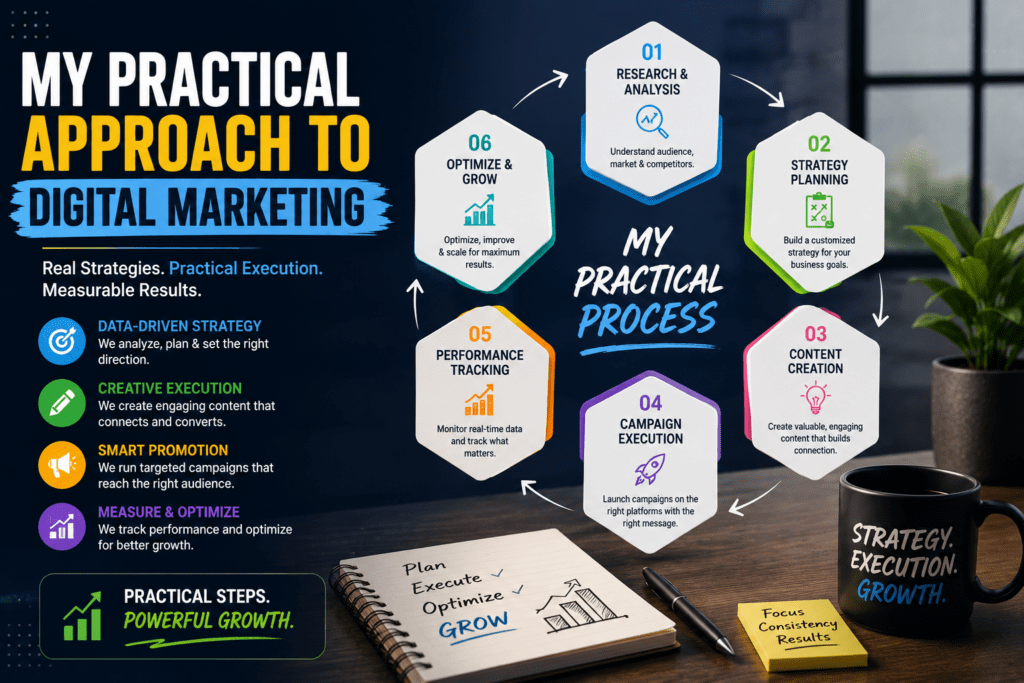
My Practical Approach to Digital Marketing
My approach comes from working directly with brands and clients rather than relying only on theory.
Over the past 3+ years, I have worked across social media marketing, content creation, cinematography, photography, video editing, branding, and advertising.
I usually look at the business from several angles:
- Understand the audience
- Study the brand and competition
- Define the communication style
- Create useful content
- Connect marketing channels
- Track performance
- Improve based on actual results
For example, if a brand receives good social media engagement but very few enquiries, the solution may not simply be posting more content. The website, offer, call to action, audience quality, and enquiry process may also need attention.
That is why I believe marketing should be treated as a connected system rather than a collection of separate tasks.
Common Digital Marketing Website Mistakes
Some websites lose potential customers because of small but avoidable problems.
Common mistakes include:
- Too much text on the homepage
- Unclear service descriptions
- Weak or missing calls to action
- Poor mobile experience
- Generic stock images everywhere
- No proof of actual work
- Slow or confusing navigation
- Promising unrealistic results
- Ignoring website analytics
A useful improvement is to review the website from a first time visitor’s perspective.
Ask yourself: If I knew nothing about this business, would I understand what it does within a few seconds?
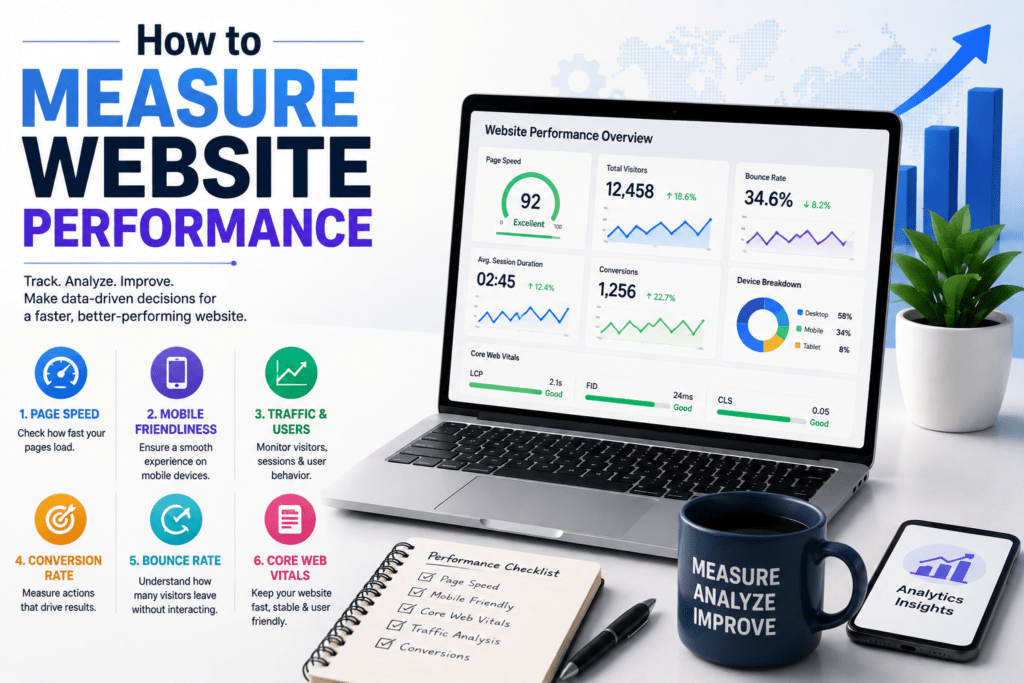
How to Measure Website Performance
A website should not be judged only by how attractive it looks.
Useful performance indicators can include:
- Website visitors
- Traffic sources
- Search impressions
- Organic clicks
- Enquiry form submissions
- Conversion rate
- Most visited pages
- Engagement with important content
For instance, if a page receives hundreds of visitors but almost no enquiries, it may need a clearer offer, stronger content, better targeting, or a simpler enquiry process.
Results also depend on factors such as competition, budget, audience, consistency, industry, and the quality of the overall strategy. There is no honest way to guarantee a specific number of leads or sales.
FAQ
What is a digital marketing website?
It is a website designed to support online marketing by presenting services, building trust, attracting relevant visitors, and encouraging useful actions such as enquiries.
Is a website important for small businesses?
Yes. A well planned website can help a small business explain its services, establish credibility, and provide customers with an easy way to make enquiries.
What online marketing services can support a website?
SEO, social media marketing, content creation, paid advertising, audience research, branding, and performance tracking can all support a website.
How does SEO help a business website?
SEO helps make website content more relevant to people searching for related products, services, or information. Good SEO focuses on useful content and a clear website structure rather than simply repeating keywords.
Can a website guarantee more sales?
No. A website can support visibility, trust, and lead generation, but results depend on several factors including the audience, offer, competition, marketing strategy, budget, and consistency.
Conclusion
A digital marketing website should do more than look professional. It should communicate clearly, build confidence, support marketing activities, and make it easy for the right audience to take the next step.
From my experience working with 70+ brands and clients, I have found that strong results usually come from consistency across content, branding, social media, SEO, advertising, and the website itself.
The goal is not to make a website complicated. The goal is to make it useful for the people who visit it.